For the team at the UK Health Security Agency (UKHSA), the partnership with Barnet and Southgate College is more than a placement opportunity — it’s an investment in the next generation of scientists who will help protect the nation’s health.
The programme gives the T Level Lab science students early exposure to scientific careers, practical experience in laboratory environments and a pathway into the workforce that might otherwise feel out of reach.
Marie Chattaway, Head of GBRU said “We wanted to engage with this programme because it’s important to reach 16–18-year-old students at the age when they’re starting to think about what they want to do,” Marie explained “I didn’t even know biomedical science existed until much later when I was already doing my degree.”
The initiative aims to both raise awareness of the organisation and provide opportunities for T Level Lab Science students who might not otherwise consider a career within the different avenues in Science and Healthcare sector.
Amina Ismail, Head of Salmonella & One Health (SOH), stated “With T Levels, students gain both an academic qualification and meaningful workplace experience.”
The T Level in Laboratory Science is one of the college’s flagship technical programmes, combining advanced scientific theory with hands on lab skills. Students study core principles such as microbiology, cell biology, laboratory techniques, quality assurance and data handling, while spending 315 hours on industry placement. The course is designed in collaboration with employers to ensure students learn the exact skills needed in modern laboratories. The first cohort of T Level Lab Science students to complete the qualification in 2025 achieved a 100% Merit rate - a remarkable achievement that reflects the strength of the programme and the commitment of the students.
Building real workplace experience
Unlike traditional short work placements, the T Level programme integrates practical work into students’ studies over a longer period. At UKHSA, this includes a structured scientific training plan designed to give students a genuine understanding of laboratory work and professional environments.
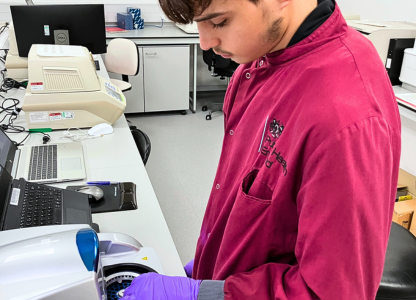
Students spend time in laboratory settings carrying out tasks such as specimen reception, labelling samples and assisting with processes like PCR testing. They also gain insight into how different sections of the organisation work together, including central specimen reception, molecular laboratories, and observation in containment-level 2 laboratories.
Beyond technical skills, the programme is designed to prepare students for future employment and further education, such as university.
“We run sessions on how to write a CV, practice interviews, and give them feedback on how they performed,” Marie explains. “They’re also treated as part of the organisation – they complete mandatory training such as safety and security courses and gain certificates they can add to their CV.”
Curriculum Manager for the programme, Nneka Echezona, says the partnership is invaluable. “Opportunities like this bring the T Level programme to life. Students learn about lab protocols, health and safety, data accuracy and scientific processes in the classroom – but UKHSA gives them the chance to apply it all in a real environment. It builds confidence, strengthens technical skills and shows them that a career in science is genuinely within their reach.”
At the end of the placement, students present their work to a team of staff at UKHSA - an experience designed to build confidence and communication skills.
Confidence and growth
For many T Level Lab Science students, stepping into a professional environment for the first time can be daunting. But Marie says the transformation they see over the placement period is one of the most rewarding parts of the programme.
“In the first week, they can feel overwhelmed – which is understandable. They’re still at college and haven’t had much workplace experience,” she said. “But over time you see their confidence grow. They start asking really thoughtful questions and showing genuine curiosity.”